
Your First Kayaking Adventure Trade A Familiar Route For The Water
How Does Water Change Your View?
Your first kayaking adventure can start at a city park lake, on a slow stretch of river or in a sheltered coastal bay. Landlocked states also offer plenty of water to explore. Think red-rock coves at Lake Powell in Utah or mountain views at Blue Mesa Reservoir in Colorado. Closer to home, a county park or reservoir marina can be a good place to find an introductory tour on sheltered waters. A guide can handle the route while the group gets comfortable with the paddle. From a few inches above the surface, even an ordinary park can feel like a different place.
The map stays the same but your world can get bigger with every microadventure.
Book Your First Kayaking Adventure
A good beginner outing leaves room to fumble around near the launch. Before booking, ask how much time the group gets to practice turning, stopping and getting back aboard. A small group on a short route leaves room for questions and a second try at a stroke. Ask what the outfitter provides and what conditions would require moving or canceling the trip. For anyone already picturing a second outing, a skills class offers more practice. For a curious Saturday, a relaxed tour with a proper briefing can be plenty.
Pick Your Paddle
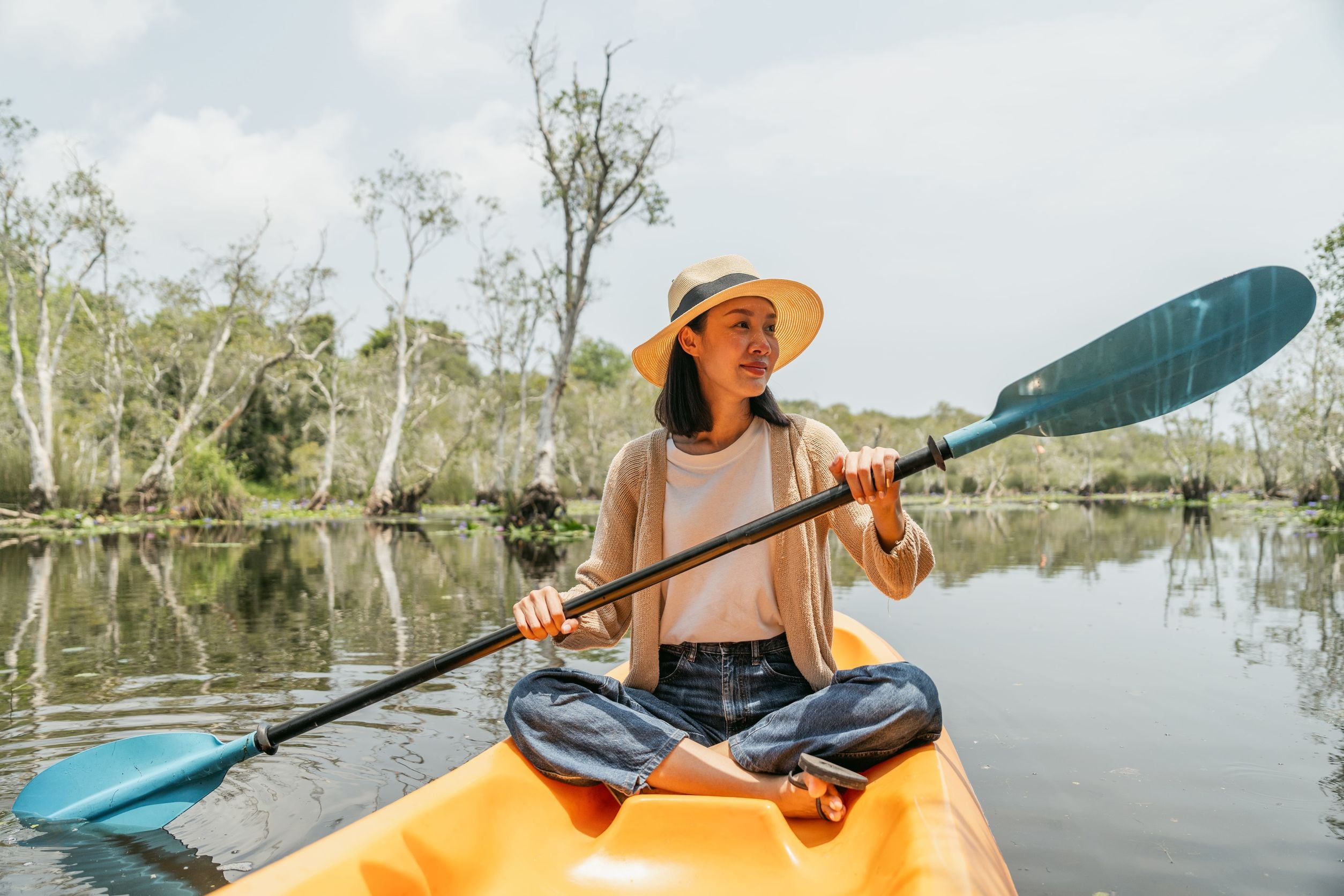
A kayak puts the seat close to the water and uses a double-bladed paddle. An open canoe offers room for a paddling partner and a picnic, with a single-bladed paddle for each person. A stand-up paddleboard (SUP) also uses a single blade and offers a higher vantage point over clear shallows. Each craft comes with its own paddling skills and a different way to get back aboard after a spill. Some luxury waterfront resorts offer beginner SUP lessons, so ask the concierge about a guided session before booking a board. An instructor can help with balance and getting from kneeling to standing. A canoe makes a good choice when a shared boat and a lazy lunch on shore sound like the afternoon.
Let The Water Set Your Pace
On a small lake, a sheltered cove offers space to turn around and try a stroke again. A gentle river adds the pleasure of traveling downstream, along with a current and a takeout to plan around. The ocean brings tides, swell and wind, so a protected bay with a local guide makes a better coastal introduction than an exposed launch. The first step for a microadventure is to do what feels right. For a first kayaking adventure, choose the calmest option available that day. Wear a snug life jacket and ask the guide about water temperature before deciding what to wear. A sunny launch can feel like summer while the water still feels like spring. Even on a lake, wind can make the paddle back feel like a different trip.
Take Your Time Around The Bend
The good part often starts when the paddle goes quiet. A heron steps out of the reeds. The reflection of a dock breaks apart in the wake. A retaining wall that looks ordinary from the road turns out to be holding a row of tiny plants in its cracks. Low to the water, even a place passed countless times can have a side worth meeting. A leisurely group leaves time for those small discoveries without making anyone feel late. Being on the water changes perspective and allows time to reflect.
Leave Room To Go Nowhere
A short paddle can have a launch, a turnaround and a return time while leaving the middle wide open. There might be a stretch where the only thing worth doing is floating for a moment with the paddle across the lap. An afternoon can feel surprisingly full with one slow pass along a bank and a few minutes watching the light change. Back on land, the same road runs past the same lake. From the car window, that little cove is visible now.